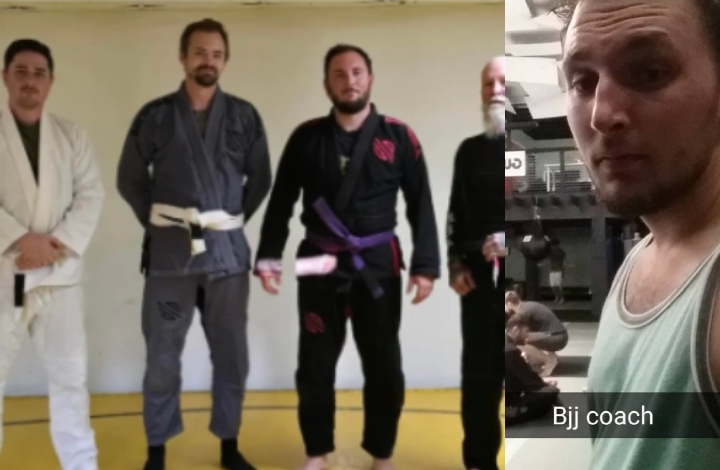
COLUMBUS, OH — Owen Brasher, a 29-year-old purple belt at Apex MMA Columbus whose only documented grappling credential is a master’s in kinesiology from a state university with no wrestling program, launched a three-tier certification system this week under the brand name The Constraint-Led Method™. The core pedagogical feature, per the course’s landing page: Brasher will not demonstrate any technique, ever, under any circumstances.
Pricing runs in escalating tiers. The $997 intro package, “Foundations of Non-Prescriptive Pedagogy,” includes seven modules and a private Discord channel. The $2,497 tier grants the “Certified Constraint-Led Coach” credential, valid for one year and renewable annually. The $4,997 “Coach Developer” badge permits the holder to certify other coaches in the methodology, creating, as Brasher puts it on the sales page, “a scalable pedagogical cascade that does not require me personally to demonstrate anything.”
Brasher earned his kinesiology master’s in 2023 from a regional state school whose athletics page lists rowing and cross-country. His thesis, a 94-page document on motor-learning acquisition in team-sport athletes, does not contain the word “grappling,” “submission,” “gi,” or “jiu.” He attended one ecological-dynamics seminar in March 2024, held in an Airbnb in Asheville, North Carolina, run by a kinesiology PhD who does not train.
“Demonstration is cognitively prescriptive,” Brasher tells the viewer in the course’s seventeen-minute introductory video, filmed at a coffee shop with visible foam-art latte in frame. “When a coach demonstrates a technique, the coach is imposing a motor solution on the learner. My job is to create the conditions under which the learner discovers the solution themselves. My job, more specifically, is to not do anything.”
The course’s module structure has attracted some curiosity from professors familiar with grappling instruction as it existed prior to 2024.
Module 1, “Emergent Positional Exploration,” consists of students starting from pre-set positions and sparring until one person taps. No rules or goals are announced beforehand. Instructors with thirty-plus years on the mats confirmed for reporters that they have been running this drill since the 1970s and have called it, at various points, “king of the guard,” “specific training,” “start from closed guard go,” or, in the absence of a name, “class.”
Module 3, “Locomotor-Escape Exploration,” is shrimping.
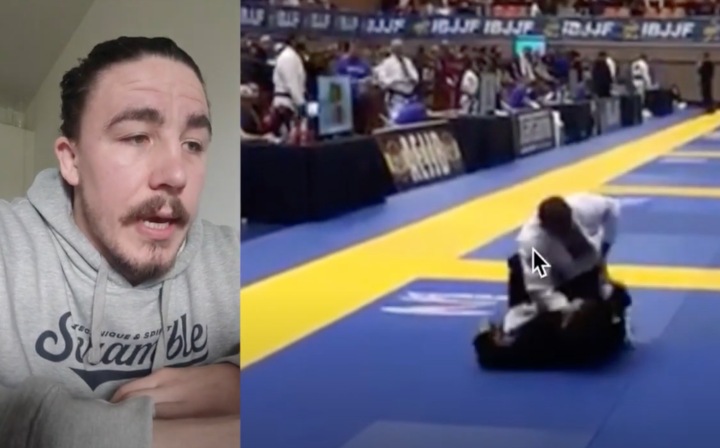
Module 7, “Constraint-Led Sweep Acquisition,” asks the student to start the round from bottom half guard and attempt to sweep. Ten professors reached for comment confirmed they have also been doing this on Tuesday nights.
“It’s like if a guy wrote a book about walking,” said one brown belt in Sacramento, who asked not to be named because he didn’t want to litigate this online. “And charged a thousand dollars for it. And the first chapter was called ‘Bipedal Locomotor Acquisition.’ And the chapter was him telling you to walk.”
Earlier this week, the National Grappling Research Institute published a six-month tracking study of 847 practitioners who had purchased the $997 tier. The results: the average practitioner’s live-sparring submission rate dropped to 0.8 percent, a 94 percent decline from their own pre-course baselines, measured in the six months prior to enrollment. Submission attempts per round fell 67 percent. Sweep completion fell 61 percent. Escape percentage fell 48 percent. Closed-guard retention fell, per the researchers, “in a way we had not previously known was statistically possible.”
A matched control group of 847 practitioners, selected from the same gyms and belt ranks, who did not purchase the course and continued training in regular class: 13.7 percent submission rate over the same six months. No changes to their curriculum. They just kept showing up.
NGRI researchers noted that across every measured skill, the Constraint-Led Method group showed no statistically detectable improvement on any variable. The one variable that moved significantly was Brasher’s monthly revenue, which rose from $0 to $204,000 over the study window.
Luis Maldonado, a black belt who runs Meridian Combat Arts in Cleveland and has been teaching the exact same drill progression to white belts for eleven years as the warm-up portion of his regular Tuesday class, offered NGRI a response.
“It’s kinesiology nerds with no skill or notoriety dressing up what every professor has done since the sport was invented,” Maldonado said. “He charges a thousand bucks to tell you to start from half guard. I charge one-eighty a month and you get Thursdays and Saturdays too. And open mat. And I’m on the mats right now. I showed three guys the same armbar entry before I picked up this phone. It’s fine. You can just do it.”
Brasher’s response to the NGRI study, published the following morning on his Substack, is a 2,400-word essay titled “Against Demonstrative Epistemologies.” The essay does not demonstrate anything. It argues that the study’s methodology of measuring submission rates is itself cognitively prescriptive, and that the real outcomes of constraint-led coaching are “non-performance-adjacent embodiments” that conventional metrics cannot capture. When NGRI reached Brasher by phone asking him to clarify what a non-performance-adjacent embodiment was, Brasher declined to clarify, citing the prescriptive nature of clarification.
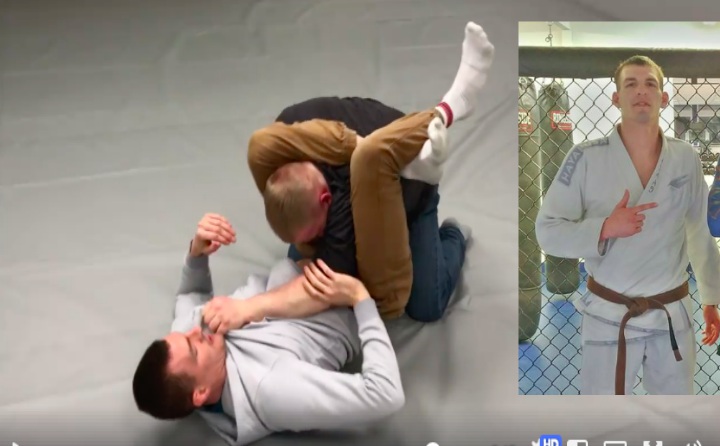
The course’s landing page features three pinned testimonials.
The first, from Kyle Dworkin, a purple belt in Asheville, reads: “Owen’s framework changed how I think about rolling. I no longer think in terms of techniques. I think in terms of affordances.” Dworkin is listed on the publicly archived 2024 ecological-dynamics seminar attendee roster alongside Brasher. The two met at the seminar.
The second pinned testimonial is from Dr. Martin Peale, the PhD who ran the 2024 seminar in the Asheville Airbnb. Peale’s testimonial reads: “Owen is one of the most rigorous minds working in pedagogical design today.” Peale’s own credentials, per his personal website, include a kinesiology PhD, one completed 5K, and zero competitive matches in any grappling sport.
The third pinned testimonial, added five days after the NGRI study went public, is from Brasher’s mother, Linda.
As of press time, Brasher had sold 122 Coach Developer badges at $4,997 each, bringing The Constraint-Led Method™‘s total network to approximately 122 additional non-demonstrating coaches, each of whom is now certified to certify further non-demonstrating coaches. A practitioner in Tucson, reached by phone, described the resulting organizational chart as “a pyramid scheme where the thing at the top of the pyramid is that nobody shows you anything.”
Maldonado, asked whether he planned to launch a competing certification program now that he had seen the revenue numbers, said he did not.
When pressed on why, he said: “Because I’d have to show people stuff. That’s the job. I’m going to go teach class.”