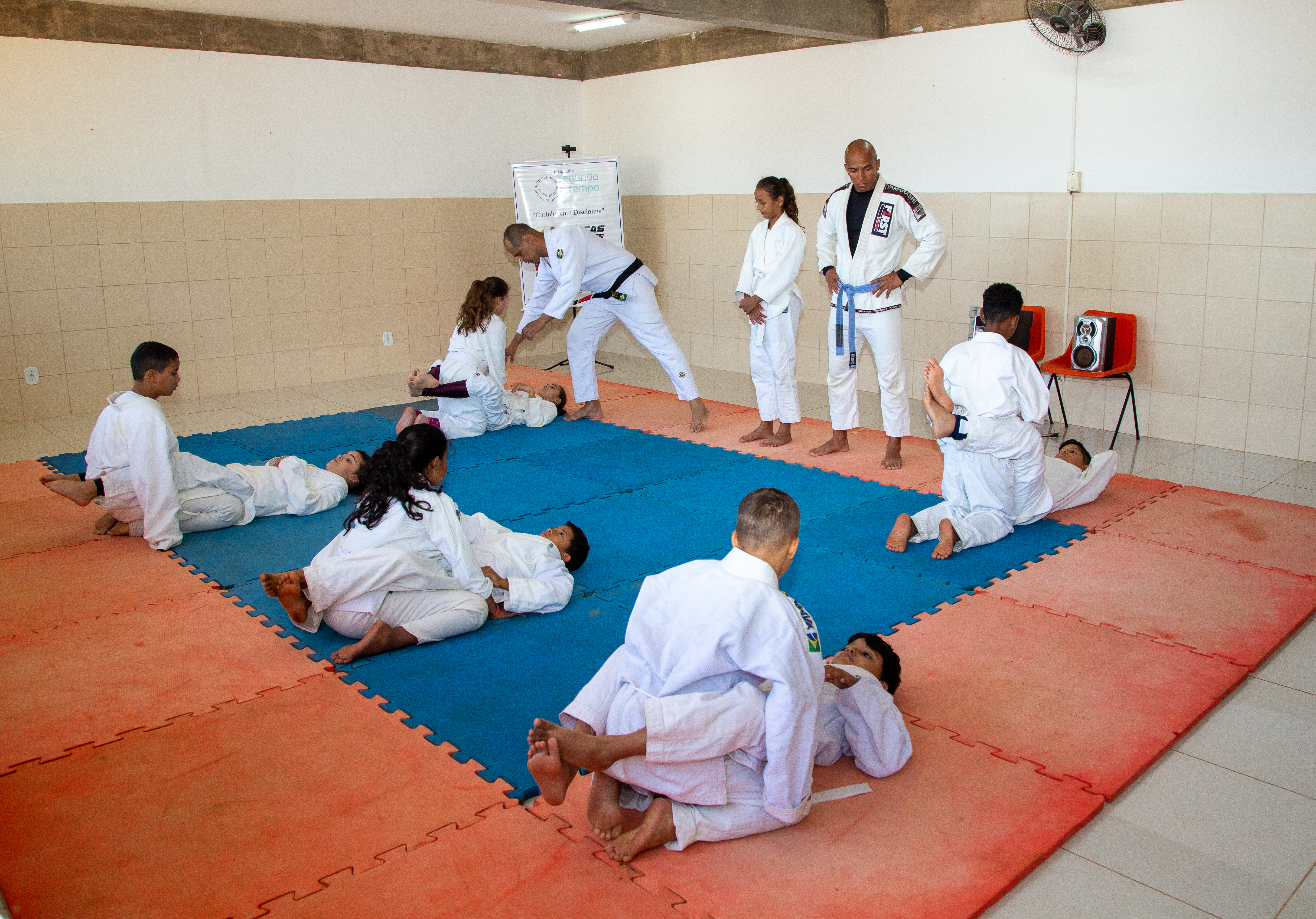
The National Grappling Research Institute released findings Wednesday from a 14-month longitudinal study tracking 2,400 practitioners across 180 academies. The results were, by every available metric, conclusive.
Practitioners who use the phrase “ecological dynamics” in casual conversation submit 94% fewer training partners than practitioners who simply say “positional sparring.” They do, however, own an average of 4.7 laminated coaching certificates, attend 340% more paid seminars per year, and are 12 times more likely to describe a basic armbar as “an emergent behavior arising from constraint manipulation.”
“The correlation was immediate and unmistakable,” said lead researcher Dr. Patricia Mulgrew, speaking from NGRI’s Motor Behavior and Vocabulary Outcomes Lab in Fort Collins, Colorado. “The moment a practitioner begins referring to guard retention as ‘an ecological constraint,’ their submission rate drops off a cliff. Their vocabulary, however, becomes extraordinary.”
The study’s most striking data point emerged during in-person evaluations. Researchers asked each participant to demonstrate a technique. The control group demonstrated techniques. The ecological group designed games.
Nobody won the games.
When presented with the submission data, 89% of ecological respondents attributed their results to “insufficient environmental design” rather than personal skill deficiency. An additional 7% requested the data be reframed as “affordance metrics” before they would engage with it. The remaining 4% were mid-sentence explaining the difference between a constraint and a boundary condition and did not notice the question.
One subject blamed his gym’s ceiling height for inhibiting his triangle.
Kevin Stasiak, a purple belt and certified Constraints-Led Approach facilitator from outside Portland, Oregon, pushed back on the study’s framing.
“Submissions aren’t the goal,” Stasiak said. “The goal is to create an environment where submissions can emerge organically from the task-organism-environment relationship.”
Stasiak has not submitted a training partner since August 2024. He has attended nine paid seminars in the past six months, each costing between $275 and $400, and recently completed an online certification in Nonlinear Pedagogy for Combat Athletes — a 14-page PDF and a laminated wallet card.
His training partner, Derek Hollis, a two-stripe white belt who has never heard the word “affordance” used in a sentence, submitted four people last Tuesday.
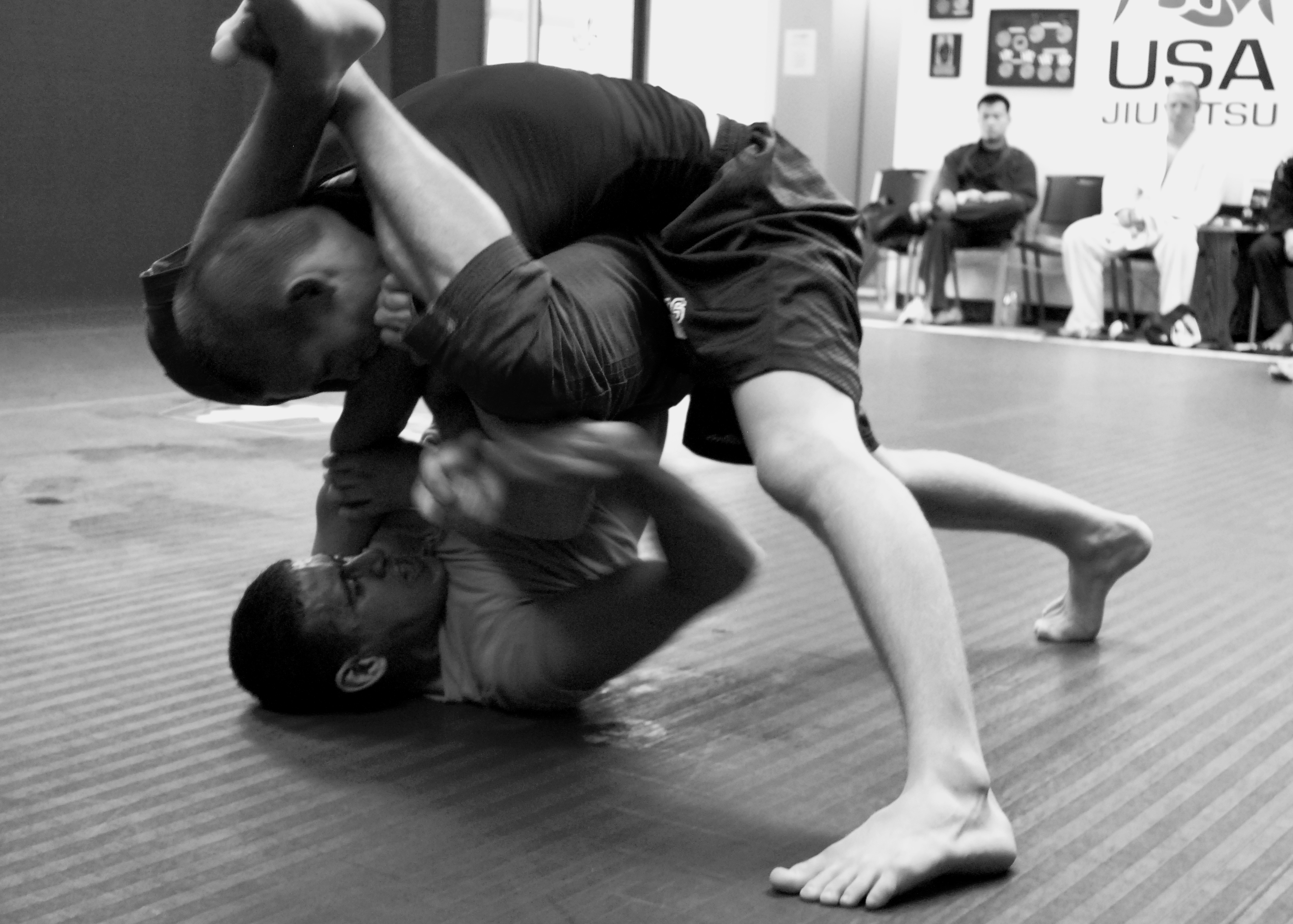
“I just kind of grabbed an arm and pulled,” Hollis said.
Dr. Mulgrew noted that the study’s most alarming finding was not the submission gap itself but the certificate accumulation rate. “The ecological group spends an average of $3,200 per year on continuing education,” she said. “That’s roughly eight times what they spend on competition entry fees. Several subjects had more certificates on their wall than recorded submissions in the past calendar year.”
The vocabulary gap was equally consistent. Where one group says “underhook,” the other says “upper-limb haptic boundary negotiation.” Functionally identical. One just comes with a PDF.
The NGRI plans a follow-up study examining whether describing a double-leg takedown as “a whole-body solution to a postural perturbation problem” affects its success rate.
Preliminary data suggests it does. Negatively.