ARLINGTON, VA — A 2026 National Center for Grappling Demographics survey of 1,803 US-based black belts has found that 73% cannot name all four listed professors in their own official lineage chain without stopping, pulling out a phone, and checking Instagram first.
The study, conducted over six months and released Monday, is being described by researchers as “the largest inventory of who actually knows where they came from ever attempted in the submission grappling space.”
Lead researcher Dr. Helena Marr, a kinesiologist affiliated with Westbrook Sport Institute, described the findings as “approximately what we expected, and approximately worse.”
“We assumed some gaps,” Marr told reporters at Monday’s press briefing. “We did not assume that 14% of respondents would confidently name at least one professor they have never, at any point in their training, actually trained under. That was a surprise. A small surprise.”
More surprising, she added, was the 6%.
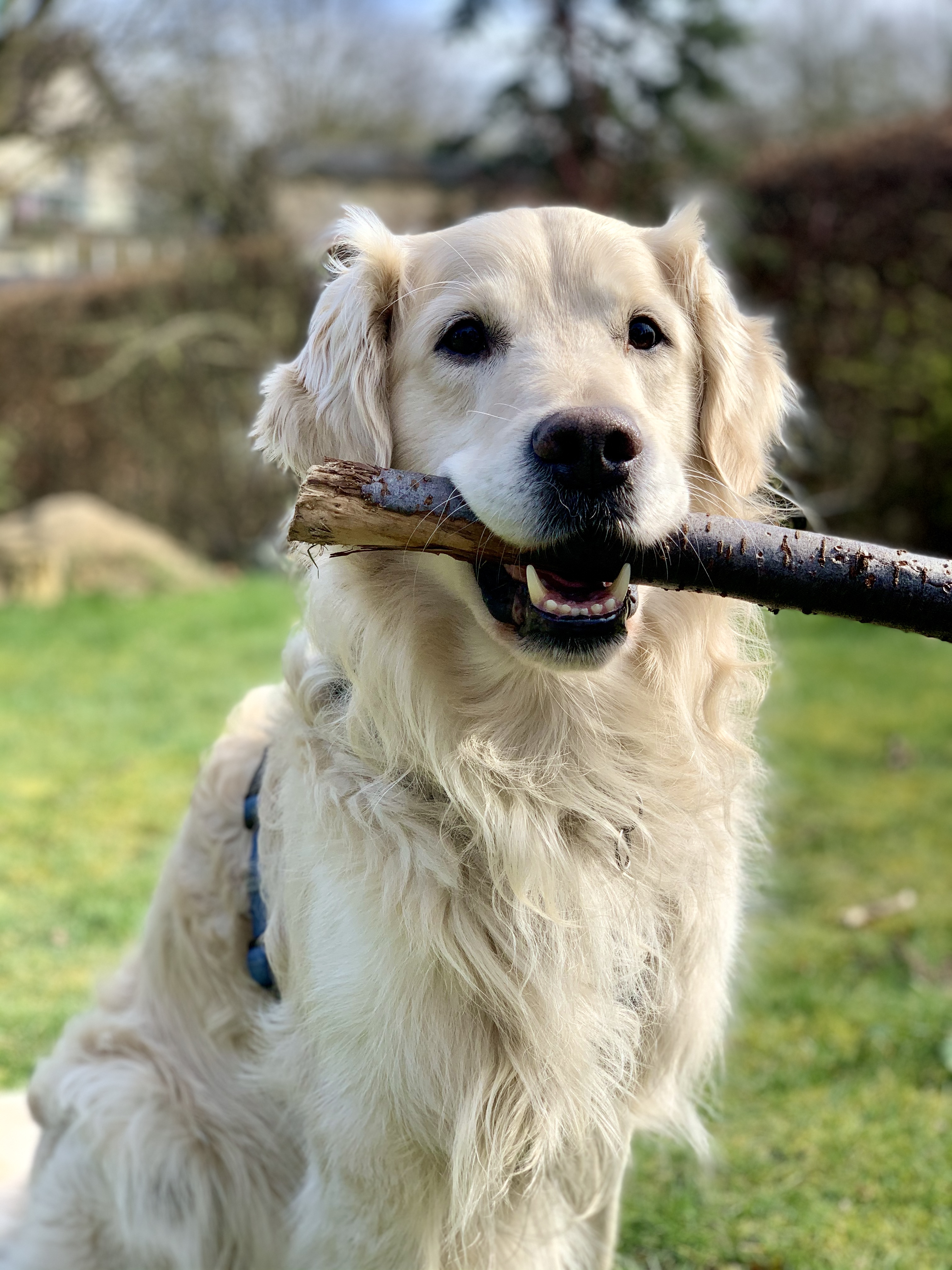
“Six percent of respondents named an individual who — on follow-up phone calls — we were able to confirm is the front-desk dog at their home academy,” said Marr, referring to a golden retriever named Ricardo who works the check-in counter at Apex Combat Systems in Tempe, Arizona, and whose name appears prominently on a handmade sign above the water fountain.
“Ricardo is seven years old. Ricardo has no belt. Ricardo has not promoted anyone. Ricardo was on the list.”
The study categorized respondents by mat time, training consistency, and time spent debating lineage accuracy in online grappling communities. Researchers were expecting those three variables to correlate in the obvious direction. They did not.
The cohort most likely to correctly recite all four professor names, the team found, had an average of 2.1 years elapsed since their last class.
“Knowing your lineage is negatively correlated with current mat time,” Marr said. “The more you train, the less you remember who promoted the person who promoted you. The more you post about who promoted the person who promoted you, the less likely you are to get it right.”
Respondents who spend six or more hours per week arguing about lineage accuracy on grappling forums scored an average of 19% — the lowest of any demographic in the study.
“The forums are not a remembering mechanism,” Marr said. “We are not sure what they are. We can confirm what they are not.”
The single most-cited four-deep chain submitted by respondents — which researchers identified across 312 separate surveys — does not match any registered chain in the Federation of Certified Grappling Lineages (FCGL), the sport’s largest record-keeper. In 58% of submissions, the listed third professor was a person the respondent appeared to have met exactly once, at a seminar, sometime in the 2010s.
The listed fourth professor, in most of those cases, was the respondent’s current head coach — who, in a significant number of instances, has publicly disowned the third person on the list in a YouTube video, a podcast appearance, a now-deleted tweet, or all three.
“The chains don’t reconcile,” Marr said. “We tried. We sat down with the FCGL records and the respondent submissions. We used highlighters. It didn’t help.”
One of the more unusual respondents, Dale Kortig, a 44-year-old licensed property appraiser and second-degree black belt from Fort Wayne, Indiana, submitted a four-name chain in which the second professor was listed simply as “The Brazilian.” When contacted for clarification, Kortig said he was “pretty sure” this was an individual who taught a weekend seminar at his gym in 2014.
“He had an accent,” Kortig said. “He was Brazilian. I remember the shirt.”
The final chart in Dr. Marr’s presentation, which researchers are calling the most diagnostic visual in the study, compares self-reported professor-naming confidence against actual professor-naming accuracy. The two lines are perpendicular.
“That’s not a correlation at all,” Marr clarified during Monday’s briefing, gesturing at a projected graph. “That’s two lines that meet once. At the origin. And then they leave. They have nothing to say to each other.”

The study also tracked how respondents reacted after being told their answers were wrong. Most, Marr said, did not update.
“Seventy-one percent maintained their original chain in follow-up interviews,” she said. “Twenty-four percent added an additional professor between the second and third names to reconcile the gap. Five percent asked if the NCGD was ‘some kind of federation psy-op.’”
A separate subgroup analysis examined the confidence levels of respondents who incorrectly named Ricardo. Ninety-one percent rated their certainty in the accuracy of their chain as “very high” or “extremely high.” Three of those respondents, when shown a photograph of Ricardo, said the photo “looked about right.” One asked if Ricardo was still taking private lessons.
Asked what she thought the single most important takeaway was, Marr paused.
“In jiu-jitsu,” she said, “the loudest lineage claim is statistically almost always the least-trained one. That’s what we found. We found that pretty consistently.”
The NCGD has declined to release the list of individual respondents, citing ethical concerns.
“Several of them will, given the chance, attempt to retroactively train under someone on it,” said Marr. “We’ve already had calls. We are not releasing the names.”
At press time, a representative for Apex Combat Systems confirmed that Ricardo remains on staff and will not be promoted at this time. A handwritten note had been added to the sign above the water fountain, clarifying that Ricardo is “a morale position, not a coaching one.”
Six of the survey respondents who named Ricardo have since written to the academy requesting seminar information.